The Texas Chainsaw Massacre- October 12
Aaron Perez
10-12-2026
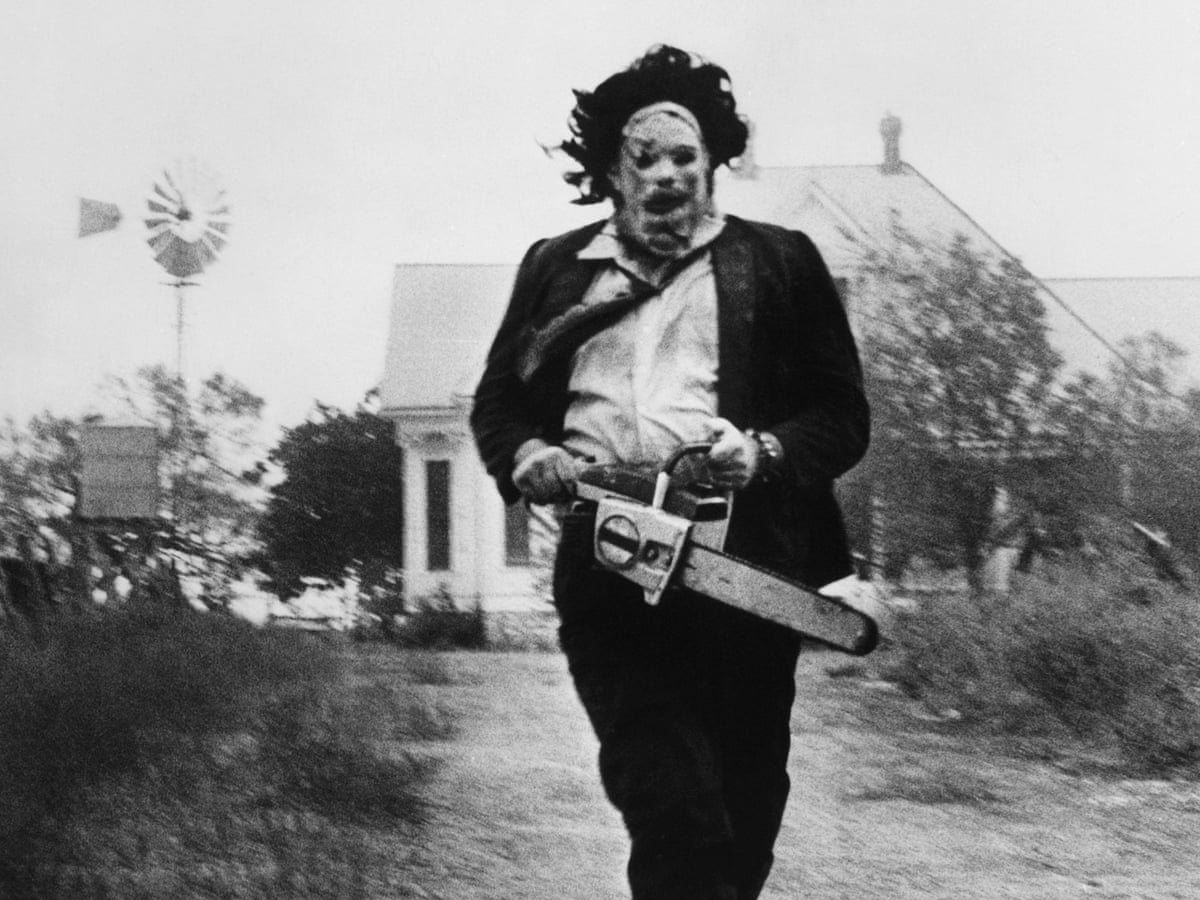
Few horror films hit with the raw, unrelenting force of The Texas Chain Saw Massacre (1974). Directed by Tobe Hooper and co-written with Kim Henkel, this low-budget independent shocker didn’t just scare audiences—it redefined the genre. Shot in the brutal Texas heat on a shoestring budget of roughly $80,000–$140,000, it became a cultural phenomenon, grossing over $30 million and inspiring decades of imitators, sequels, remakes, and reboots. Leatherface, the chainsaw-wielding maniac in a mask of human skin, joined the pantheon of iconic slashers alongside Michael Myers and Jason Voorhees.
The film was marketed with the provocative claim that it was “based on a true story.” While loosely inspired by the crimes of Ed Gein (whose real-life horrors also influenced Psycho and The Silence of the Lambs), the story is largely fictional. Its power comes from atmosphere, sound design, and a sense of documentary realism rather than excessive on-screen gore.
The Original Nightmare (1974)
Five young people—Sally Hardesty (Marilyn Burns), her wheelchair-using brother Franklin (Paul A. Partain), and their friends—drive through rural Texas to check on their grandfather’s grave after reports of vandalism. They pick up a disturbed hitchhiker, visit an abandoned family home, and soon stumble into the territory of a cannibalistic family of former slaughterhouse workers. The group includes the hulking Leatherface (Gunnar Hansen), his brothers, and a withered grandfather.
What follows is a relentless night of pursuit, torture, and survival. Sally’s final flight and hysterical escape remain one of horror’s most visceral set pieces. Hooper’s direction, combined with Wayne Bell’s industrial-noise score and Daniel Pearl’s sun-bleached cinematography, creates an oppressive, almost unbearable tension. The film was banned or heavily cut in several countries yet built a massive cult following. It helped launch the modern slasher boom and established the “final girl” archetype that would dominate the genre.
The Sequels Begin: Dark Comedy and Chaos
The Texas Chainsaw Massacre Part 2 (1986) Tobe Hooper returned more than a decade later and deliberately leaned into the dark humor he felt audiences had missed in the original. The Sawyer family has relocated to an abandoned theme park and runs a successful chili business (with a secret ingredient). Radio DJ Vanita “Stretch” Brock (Caroline Williams) becomes entangled with the clan after a chaotic confrontation involving Leatherface and the memorable Chop Top (Bill Moseley), a shell-shocked Vietnam veteran with a metal plate in his head. Dennis Hopper plays a vengeful relative of the original victims. The tone is louder, gaudier, and more satirical than the first film. Many fans consider it the strongest sequel for its wild energy and memorable characters, even if it abandons the original’s stark realism.
Leatherface: The Texas Chainsaw Massacre III (1990) This entry dials back the comedy and tries for a more straightforward slasher. A young couple on a road trip crosses paths with a new iteration of the family. R.A. Mihailoff plays Leatherface, and a young Viggo Mortensen appears in a supporting role. The film is leaner and more focused on gore, though it lacks the distinctive personality of the first two. It remains a solid, if lesser, entry in the original continuity.
Texas Chainsaw Massacre: The Next Generation (1995) Also known as The Return of the Texas Chainsaw Massacre, this one is notorious for starring then-unknown Renée Zellweger and Matthew McConaughey. A group of teens (including Zellweger’s Jenny) encounters a bizarre, almost surreal version of the Sawyer family after a car accident. McConaughey’s performance as a manic family member is particularly unhinged. The film had a troubled production and release history and is often ranked among the weaker entries, though its early star power gives it cult curiosity value.
These four films form the closest thing to a continuous original timeline, though continuity is loose even here.
Remakes, Prequels, and Fractured Continuities
In the 2000s the franchise split into multiple timelines.
The Texas Chainsaw Massacre (2003) Marcus Nispel’s Platinum Dunes remake (produced by Michael Bay) updates the story with a more polished look and increased violence. Jessica Biel stars as the final girl. It was a commercial success and introduced a new generation to Leatherface (played by Andrew Bryniarski).
The Texas Chainsaw Massacre: The Beginning (2006) A prequel to the 2003 film that explores the origins of this version of Leatherface and the family. It is even more graphic than its predecessor and focuses on the events leading up to the remake’s massacre.
Texas Chainsaw 3D (2013) This film positions itself as a direct sequel to the 1974 original, ignoring the intervening sequels. It follows a young woman who discovers she is related to the Sawyer family. The 3D presentation and modern production values divide fans; some appreciate the attempt to reconnect with the original, while others find it formulaic.
Leatherface (2017) A prequel that traces the childhood and institutionalization of the character who becomes Leatherface. It attempts to give psychological background to the icon, with mixed results. Continuity-wise, it can be viewed as leading into the 1974 film in certain timelines.
Texas Chainsaw Massacre (2022) Released on Netflix, this legacy sequel is set decades after the original 1974 events. A group of young entrepreneurs arrives in a dying Texas town to revitalize it, only to cross paths with an aging Leatherface. Sally Hardesty returns in a significant role. The film aims for the “requel” style popularized by recent Halloween and Scream entries—connecting to the classic while introducing new characters. Reception was polarized, with praise for some practical effects and criticism of the script and tone.
Why the Franchise Endures
The original Texas Chain Saw Massacre endures because it feels dangerous. It captures a specific 1970s anxiety—economic decline, the aftermath of Vietnam, distrust of institutions—through the metaphor of a family discarded by industrial progress who turn their skills against the living. Later films vary wildly in quality and tone, ranging from black comedy to straight gore to origin stories. The multiple competing continuities can frustrate viewers seeking a single coherent saga, but they also keep the brand alive across generations.
Leatherface remains one of cinema’s purest embodiments of mindless, relentless violence. He rarely speaks. He needs no complex motivation. The chainsaw is both tool and extension of himself. That primal simplicity, born in a sweltering Texas summer in 1973, still cuts deep more than fifty years later.
Whether you stick to the original timeline, explore the remake universe, or simply revisit the 1974 classic, the Texas Chainsaw Massacre franchise offers a messy, bloody, and strangely compelling body of work. Just don’t pick up any hitchhikers on those back roads.
Sources:
The Texas Chain Saw Massacre. Directed by Tobe Hooper, performances by Marilyn Burns, Paul A. Partain, and Gunnar Hansen, Bryanston Distributing Company, 1974.
The Texas Chainsaw Massacre Part 2. Directed by Tobe Hooper, performances by Dennis Hopper, Caroline Williams, and Bill Moseley, Cannon Films, 1986.
Leatherface: The Texas Chainsaw Massacre III. Directed by Jeff Burr, performances by Kate Hodge, Ken Foree, and R.A. Mihailoff, New Line Cinema, 1990.
Texas Chainsaw Massacre: The Next Generation. Directed by Kim Henkel, performances by Renée Zellweger and Matthew McConaughey, Columbia Pictures, 1995.
The Texas Chainsaw Massacre. Directed by Marcus Nispel, performances by Jessica Biel and R. Lee Ermey, New Line Cinema, 2003.
The Texas Chainsaw Massacre: The Beginning. Directed by Jonathan Liebesman, New Line Cinema, 2006.
Texas Chainsaw 3D. Directed by John Luessenhop, Lionsgate, 2013.
Leatherface. Directed by Julien Maury and Alexandre Bustillo, Lionsgate, 2017.
Texas Chainsaw Massacre. Directed by David Blue Garcia, Netflix, 2022.
“The Texas Chain Saw Massacre.” Encyclopædia Britannica, 10 July 2026, www.britannica.com/topic/The-Texas-Chain-Saw-Massacre-1974-film.
“The Texas Chainsaw Massacre (franchise).” Wikipedia, Wikimedia Foundation, en.wikipedia.org/wiki/The_Texas_Chainsaw_Massacre_(franchise). Accessed 11 Aug. 2026.
Hooper, Tobe, and Kim Henkel. The Texas Chain Saw Massacre. 1974. (Film primary source referenced throughout.)


Comments
Post a Comment