Halloween, the first Modern Slasher Series- October 13
Aaron Perez
10-13-2026
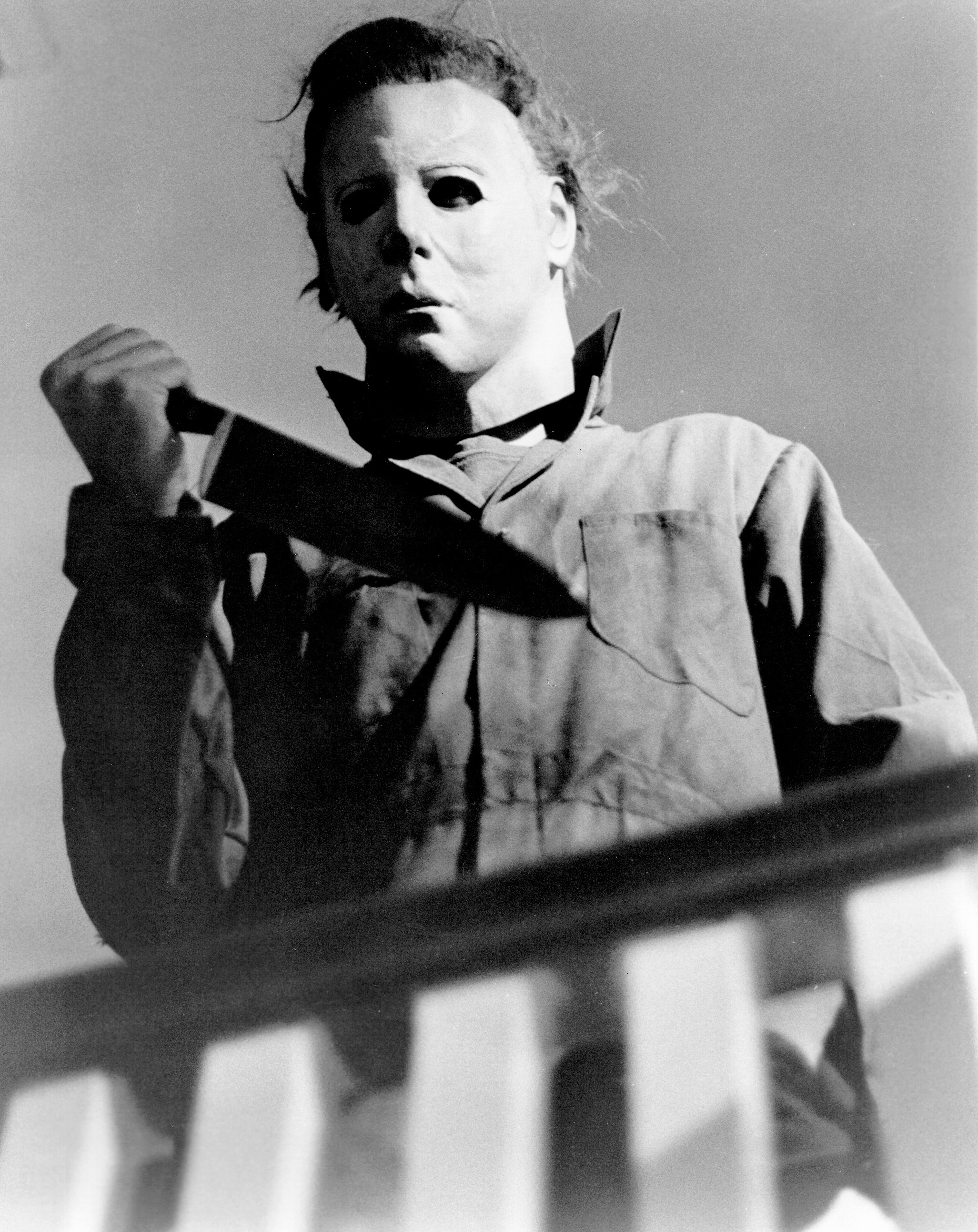
Few horror icons have cast a longer, colder shadow than Michael Myers. The silent, white-masked figure who first stalked the quiet streets of Haddonfield, Illinois, in 1978 remains one of cinema’s purest embodiments of evil. John Carpenter’s Halloween didn’t just launch a franchise—it helped define the modern slasher genre. What followed is a sprawling, often contradictory saga of sequels, reboots, and alternate timelines that has kept “The Shape” returning for nearly half a century.
The Night He Came Home: Halloween (1978)
On Halloween night 1963, six-year-old Michael Myers murders his teenage sister Judith in their Haddonfield home while wearing a clown costume and mask. Fifteen years later, the now-adult Michael escapes Smith’s Grove Sanitarium on the eve of Halloween 1978. His former psychiatrist, Dr. Sam Loomis (Donald Pleasence), who has long believed the boy is pure evil rather than merely insane, races to stop him. Meanwhile, high-school student Laurie Strode (Jamie Lee Curtis, in her film debut) and her friends become the focus of Michael’s silent, relentless pursuit as they babysit on Halloween night.
Directed, co-written, and scored by John Carpenter (with co-writer/producer Debra Hill), the film was made on a shoestring budget of roughly $300,000–$325,000 and went on to gross around $70 million. Its influence is hard to overstate: the deliberate pacing, subjective camera work that puts the audience in the killer’s perspective, the minimalist electronic score, and the idea of an unstoppable “boogeyman” in suburban America reshaped horror. Nick Castle’s physical performance as “The Shape,” combined with the expressionless William Shatner Captain Kirk mask (modified and painted white), created an instantly iconic silhouette.
The film ends with Michael apparently defeated—yet his body vanishes. That final shot of an empty lawn, accompanied by Carpenter’s unsettling score, left the door wide open.
Michael Myers: Pure Evil in a Mask
Michael is deliberately opaque. In the original film he barely speaks (and never does so as an adult). Dr. Loomis describes meeting the six-year-old: a blank, pale, emotionless face with “the blackest eyes—the devil’s eyes.” After years of failed attempts to reach him, Loomis concludes that what lives behind those eyes is “purely and simply… evil.”
Carpenter drew partial inspiration from a real encounter during a college psychology class visit to a mental institution, where a young patient’s vacant, unsettling stare stayed with him. The name “Michael Myers” came from a European distributor of Carpenter’s earlier film Assault on Precinct 13. The character’s unstoppable quality also echoed the relentless robot gunslinger in Westworld.
Later films layered on motivations—family bloodlines, ancient curses, trauma—but the original’s power lies in the absence of explanation. Michael is not a tragic figure or a victim of circumstance in Carpenter’s vision; he is the embodiment of irrational, inexplicable violence that can appear in ordinary places.
A Franchise of Fractured Timelines
The Halloween series is notoriously non-linear. Rights changes, creative reboots, and the desire to bring Jamie Lee Curtis back (or leave her out) produced multiple competing continuities. Here’s a clear overview of the major branches:
The Original / “Thorn” Continuity
- Halloween (1978)
- Halloween II (1981) — Picks up the same night; reveals Laurie is Michael’s younger sister.
- Halloween 4: The Return of Michael Myers (1988)
- Halloween 5: The Revenge of Michael Myers (1989)
- Halloween: The Curse of Michael Myers (1995)
This line introduces the Cult of Thorn, an ancient curse that supposedly drives Michael to kill his bloodline. It grows increasingly baroque and is widely regarded as the most convoluted stretch of the series.
The H20 Continuity
- Halloween (1978) + Halloween II (1981)
- Halloween H20: Twenty Years Later (1998)
- Halloween: Resurrection (2002)
This timeline ignores 4–6. Laurie has faked her death, lives under an assumed name, and raises a son while preparing for Michael’s inevitable return. H20 was a strong critical and commercial success that felt like a proper 20th-anniversary event; Resurrection is frequently cited as one of the franchise’s low points.
Rob Zombie’s Reboot
- Halloween (2007)
- Halloween II (2009)
Zombie’s films provide a gritty, more explicit origin story for young Michael and a different take on Laurie. They stand completely apart from the other continuities.
The Blumhouse / David Gordon Green Trilogy (2018–2022)
- Halloween (1978) only
- Halloween (2018)
- Halloween Kills (2021)
- Halloween Ends (2022)
This “requel” trilogy erases everything after the 1978 original. Laurie is not Michael’s sister. She has spent forty years traumatized and preparing for his return. The trilogy explores intergenerational trauma, mob mentality, and the idea that evil can be passed on or absorbed. It concludes with a definitive (for now) confrontation.
The Outlier Halloween III: Season of the Witch (1982) has nothing to do with Michael Myers. Carpenter and Hill originally envisioned the series as an anthology; this standalone story about a sinister Halloween-mask company remains a cult curiosity.
Why Michael Still Matters
Across every timeline, the core image endures: a tall figure in a boiler suit and blank white mask, head slightly tilted, walking with deliberate calm through ordinary American streets. He is not witty like Freddy Krueger or tragic like Jason Voorhees in some interpretations. He is the void staring back.
The original 1978 film remains the high-water mark—elegant, terrifying, and influential. The sequels range from solid (Halloween II, H20, the 2018 film) to messy to downright strange. Yet the character’s simplicity is what keeps him potent. In an age of elaborate lore and origin stories, Michael Myers still works best when he is simply there—an unstoppable force that needs no reason beyond the fact that it is Halloween night in Haddonfield, and the Shape has come home again.
Whether future projects reset the board once more (talk of a creative reset and possible television series has circulated), the blank mask and Carpenter’s score will likely keep walking into the dark for years to come.
Sources:
Carpenter, John, director. Halloween. Compass International Pictures, 1978.
“Halloween (1978 film).” Wikipedia, Wikimedia Foundation, 11 Aug. 2026, en.wikipedia.org/wiki/Halloween_(1978_film).
“Halloween Continuity Guide: Which Halloween Movies Are Connected?” Paste Magazine, 15 Oct. 2025, www.pastemagazine.com/movies/halloween/halloween-continuity-guide.
“Halloween Timelines Explained: Every Version & Canon Status.” ScreenRant, 1 Apr. 2026, screenrant.com/halloween-franchise-every-timeline-explained/.
“How John Carpenter Dreamed up Michael Myers of ‘Halloween.’” InsideHook, 12 Oct. 2018, www.insidehook.com/culture/real-origin-story-michael-myers.
“How to Watch All 13 ‘Halloween’ Movies in Order.” Hola!, 31 Oct. 2025, www.hola.com/us/entertainment/20251031863633/how-to-watch-halloween-movies-in-order/.
“Michael Myers’ Backstory Explained.” Looper, 6 Oct. 2021, www.looper.com/625413/michael-myers-backstory-explained/.
“The Halloween Franchise Timelines Explained.” Collider, 7 Oct. 2021, collider.com/halloween-timelines-explained-what-order-to-watch/.
“Halloween: Timeline of the Michael Myers Franchise Explained.” ComicBook.com, 10 Oct. 2022, comicbook.com/horror/news/halloween-movies-michael-myers-franchise-explained-timelines-laurie-strode/.


Comments
Post a Comment