A Nightmare on El Street- October 17
Aaron Perez
10-17-2026
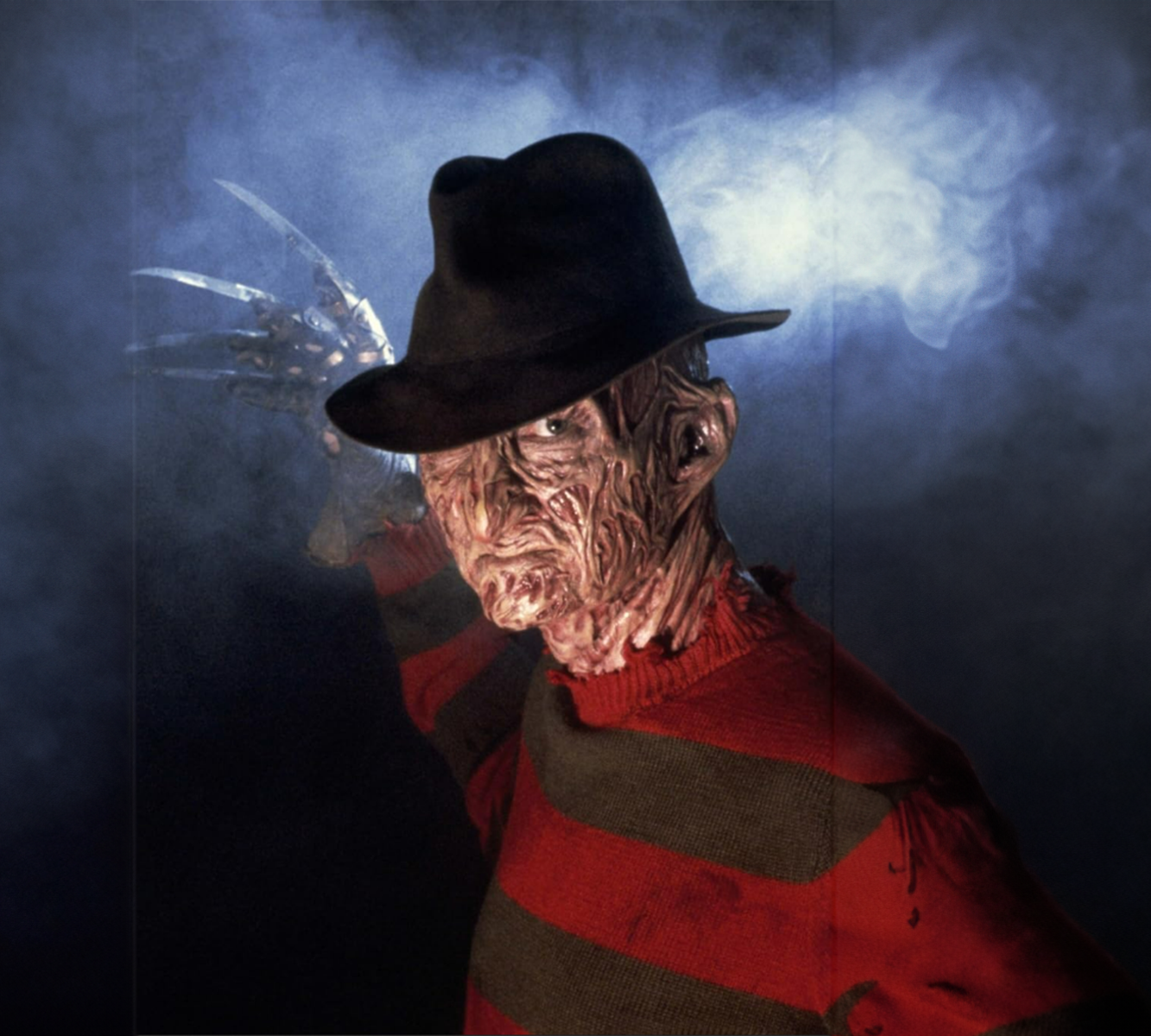
Few horror icons cut as deep—or linger as long—as Freddy Krueger. Born from Wes Craven’s 1984 original, the burned child killer with the razor-glove and filthy sweater turned sleep itself into a death sentence. What started as a lean, nightmarish indie became one of the defining slashers of the 1980s and beyond: nine films, a TV series, comics, novels, and a cultural footprint that still haunts Halloween costumes and internet memes.
The Original Cycle: Building the Dream (1984–1991)
A Nightmare on Elm Street (1984)
Wes Craven’s original remains the gold standard. Teenagers on Elm Street in Springwood, Ohio, share nightmares of a scarred man in a boiler room. If he kills you in the dream, you die for real. Heather Langenkamp’s Nancy Thompson becomes the final girl who fights back with ingenuity and courage. Robert Englund’s Freddy is chilling, witty, and genuinely terrifying. The film mixed practical effects, surreal imagery, and parental guilt into something that felt new.
A Nightmare on Elm Street 2: Freddy’s Revenge (1985)
A new family moves into the old Thompson house. Freddy tries to possess teenage Jesse Walsh (Mark Patton) to kill in the real world. It’s the odd one out—more body-horror and possession than pure dream logic—and was long dismissed. In later years it gained a cult following, especially for its queer subtext and energetic set pieces.
A Nightmare on Elm Street 3: Dream Warriors (1987)
Widely regarded as the best sequel. Nancy returns as a counselor at a psychiatric hospital where the last of Freddy’s targets are locked up. The “Dream Warriors” discover they can bring their unique skills into the dream world. Craven co-wrote it; Chuck Russell directed. The kills are inventive, the lore expands (Freddy’s origins as the “bastard son of a hundred maniacs”), and the tone balances horror and dark humor perfectly.
A Nightmare on Elm Street 4: The Dream Master (1988)
Alice Johnson inherits the fight after the Dream Warriors fall. She absorbs her friends’ abilities and becomes the new “Dream Master.” Renny Harlin’s flashy direction delivers some of the franchise’s most memorable (and grotesque) set pieces—the cockroach transformation, the waterbed kill, the pizza-face gag. Peak “Freddymania.”
A Nightmare on Elm Street 5: The Dream Child (1989)
Alice is pregnant, and Freddy targets her unborn child. The film leans harder into surreal, nightmarish imagery but feels exhausted. Some strong practical effects can’t fully overcome the sense of diminishing returns.
Freddy’s Dead: The Final Nightmare (1991)
Intended as the end. Freddy is transported to a new town, and a young woman who turns out to be his daughter confronts him. It includes 3D sequences in theaters and a deliberately campy, over-the-top tone. Many fans consider it the low point of the original run, though it has its defenders for pure chaos.
The Meta Experiment: Wes Craven’s New Nightmare (1994)
Craven returned with a brilliant, self-aware twist. Heather Langenkamp plays herself; Robert Englund plays himself; the Nightmare movies exist in the real world. An ancient demonic entity has taken the form of Freddy and is crossing into reality because the sequels have diluted the original terror. It’s meta-horror years before Scream, and still one of the smartest entries in the series. It sits outside the main continuity but feels like a creative reset.
The Crossover: Freddy vs. Jason (2003)
After years of development hell (dozens of scripts, rights issues between New Line and Paramount), the two biggest slashers of the era finally met. Freddy is weakened because the kids of Springwood have forgotten him (or been medicated into dreamlessness). He resurrects Jason Voorhees and sends him to Elm Street to create fear so Freddy can feed again. Jason, of course, won’t stop killing.
Directed by Ronny Yu, the film is pure monster-mash spectacle: raves, boiler-room fights, a cornfield showdown, and a final battle that ends on a classic horror wink. It was a massive commercial hit—the highest-grossing entry in either franchise at the time—and gave Robert Englund a memorable final theatrical outing as Freddy. Plans for a Freddy vs. Jason vs. Ash sequel became comics instead.
The Remake: A Nightmare on Elm Street (2010)
Platinum Dunes (Michael Bay’s company) rebooted the original with Jackie Earle Haley as a grimmer, more realistic Freddy and Rooney Mara as Nancy. The film dials up the pedophilia angle in Freddy’s backstory and aims for a darker, less jokey tone. It made solid money (one of the franchise’s highest grossers) but was critically savaged for being a joyless retread with unconvincing CGI dream sequences. Most fans still prefer Englund’s theatrical, larger-than-life version.
Beyond the Movies
Freddy’s Nightmares (1988–1990)
An anthology series hosted by Freddy. Most episodes featured two short stories set in Springwood; Freddy sometimes appeared as the antagonist, sometimes just as the gleeful narrator. The pilot retells his origin. It’s uneven but has cult charm and expands the world of Elm Street.
Comics and Novels
Multiple publishers (Marvel, Innovation, Avatar, WildStorm) produced series that continued stories, reunited survivors, or explored new dream victims. Novelizations of the films exist alongside original Black Flame novels that take Freddy into more sci-fi or future-set territory.
The Future: Two Reboots at Once?
After more than a decade of dormancy following the 2010 remake, the franchise is stirring again—in a uniquely complicated way. Wes Craven’s estate reclaimed U.S. rights to the original screenplay. In 2026 Paramount acquired those rights for a new film under its Primal genre label, with Craven’s widow and son producing. At the same time, Warner Bros./New Line (which still holds international rights) is reportedly developing its own version, with Lee Cronin (Evil Dead Rise) in talks to write and direct. The result is a rare situation of two competing Nightmare projects moving forward amid the studios’ own corporate drama.
Whether one, both, or neither reaches theaters, Freddy’s cultural grip remains strong. The original films (especially 1, 3, and New Nightmare) still hold up, Freddy vs. Jason delivers pure popcorn mayhem, and the character’s mix of dark humor and genuine menace continues to influence horror.
One, two, Freddy’s coming for you… and after more than forty years, he’s still finding new ways to invade the dream.
Sources:
“A Nightmare on Elm Street (2010 film).” Wikipedia, Wikimedia Foundation, 3 Oct. 2026, en.wikipedia.org/wiki/A_Nightmare_on_Elm_Street_(2010_film).
“Freddy vs. Jason.” Wikipedia, Wikimedia Foundation, en.wikipedia.org/wiki/Freddy_vs._Jason.
“Freddy’s Nightmares.” Wikipedia, Wikimedia Foundation, 29 Sept. 2026, en.wikipedia.org/wiki/Freddy%27s_Nightmares.
Fleming, Mike, Jr. “‘A Nightmare On Elm Street’ Reboot Heads To Paramount: Here’s Why.” Deadline, 13 July 2026, deadline.com/2026/07/a-nightmare-on-elm-street-paramount-1236980882/.
Kit, Borys. “New ‘Nightmare on Elm Street’ Movie in the Works From Paramount.” The Hollywood Reporter, 13 July 2026, www.hollywoodreporter.com/movies/movie-news/nightmare-on-elm-street-movie-paramount-1236646496/.
Squires, John. “The ‘Nightmare on Elm Street’ Franchise Is Now Available on 4K Ultra HD for the First Time!” Bloody Disgusting, 30 Sept. 2025, bloody-disgusting.com/home-video/3906488/the-nightmare-on-elm-street-franchise-is-now-available-on-4k-ultra-hd-for-the-first-time/.


Comments
Post a Comment