2000s Zombie boom October 21st
Aaron Perez
10/21/2026
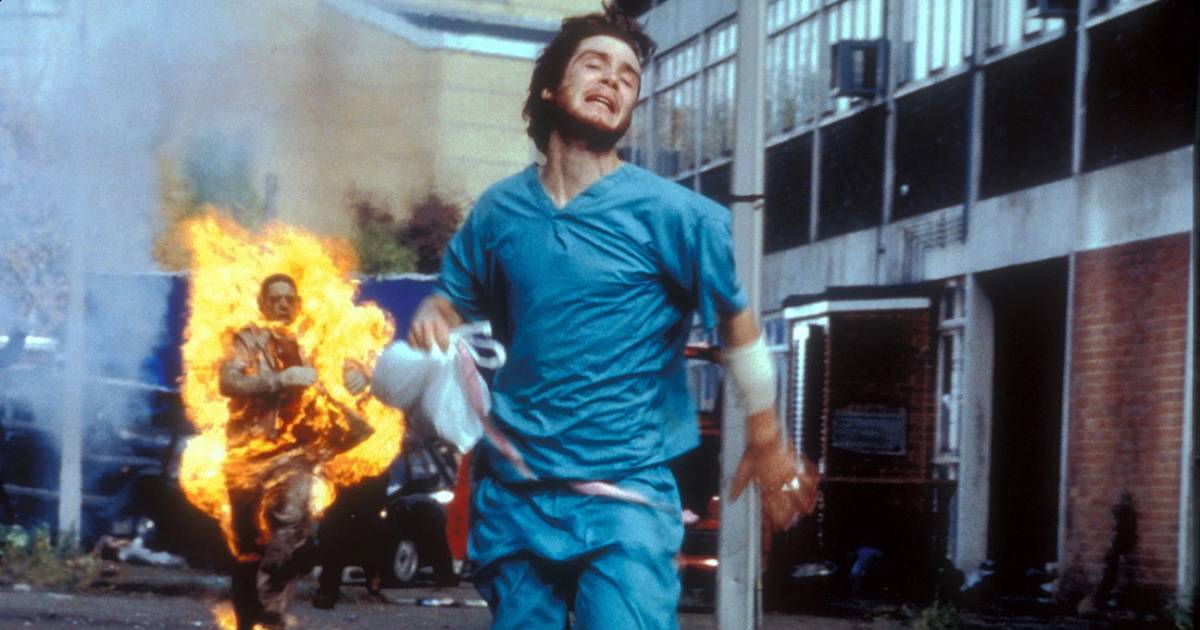
The early 2000s marked a full-scale resurrection of the zombie genre. After a relatively quiet stretch in the 1990s, the undead—or something very close to them—surged back into pop culture with new speed, new intensity, and surprising cultural reach. What began as a handful of films quickly spread into comics, video games, and eventually television, turning zombies into one of the defining horror icons of the decade.
The spark was 28 Days Later (2002). Directed by Danny Boyle and written by Alex Garland, the film followed bicycle courier Jim (Cillian Murphy) as he woke from a coma to find London emptied by the “Rage” virus. The infected were not the slow, shambling corpses of George A. Romero’s classics. They were living humans transformed into sprinting, screaming predators who could turn victims in seconds. Shot on digital video with a raw, handheld energy, the movie felt urgent and contemporary. Its iconic opening sequence of a solitary figure wandering deserted streets captured a post-9/11 sense of sudden societal collapse. Though Boyle has long insisted it is not strictly a zombie film, its influence was immediate and enormous. Low-budget success (roughly $8 million budget, more than $80 million worldwide) proved the concept still had commercial and artistic power.
The film’s innovations—fast “zombies,” virus-based infection rather than pure reanimation, and a focus on human fragility amid chaos—redefined the rules. Suddenly the threat moved at human speed, and survival required constant motion rather than careful, methodical defense.
The 2004 Double Punch: Dawn of the Dead and Shaun of the Dead
Two years later, the genre received twin injections of adrenaline. Zack Snyder’s Dawn of the Dead (2004), written by James Gunn, reimagined Romero’s 1978 shopping-mall satire. The remake kept the mall setting and consumerist undertones but replaced slow walkers with aggressive, running hordes. Sarah Polley, Ving Rhames, and Jake Weber led a group of survivors through intense action set pieces, including a brutal opening sequence that remains one of the most effective outbreak depictions on film. The movie was a commercial hit and one of the strongest studio remakes of the era, further mainstreaming the faster, more kinetic zombie.
The same year, Edgar Wright’s Shaun of the Dead delivered the perfect counterbalance. A loving, hilarious British comedy starring Simon Pegg and Nick Frost, it treated the apocalypse as an inconvenience that interrupts pub routines and relationship problems. The film’s mix of sharp satire, genuine scares, and affectionate genre homage showed that zombies could be funny without losing their bite. Together, Snyder’s intensity and Wright’s wit proved the subgenre’s flexibility and helped cement 2004 as a pivotal year.
Comics, Television, and the Wider Outbreak
While films led the charge, other media expanded the infection. Robert Kirkman’s comic The Walking Dead debuted in 2003, just months after 28 Days Later reached American theaters. Its opening—a man waking in a hospital to a collapsed world—echoed Boyle’s film so closely that the parallel is often noted. The series focused less on the undead themselves and more on the brutal social dynamics among survivors. Its television adaptation would arrive in 2010 and become a cultural phenomenon, but the comic’s launch firmly belonged to the 2000s boom.
Other notable entries kept the momentum going:
- 28 Weeks Later (2007) returned to the Rage universe with a more action-oriented sequel set during the attempted reopening of London.
- [REC] (2007), the Spanish found-footage shocker, trapped viewers inside an apartment building as infection spread with claustrophobic intensity.
- Zombieland (2009) brought American road-trip comedy, complete with Woody Harrelson’s rules for survival and a memorable celebrity cameo.
- George A. Romero himself returned with Land of the Dead (2005), continuing his social allegories in a world where the living and the dead had reached an uneasy stalemate.
- The Resident Evil film series (beginning 2002) translated the popular video-game franchise into big-screen action, helping feed the commercial appetite.
Films like I Am Legend (2007) and Robert Rodriguez’s Planet Terror (part of the 2007 Grindhouse double feature) further diversified the tone, from somber post-apocalyptic drama to grindhouse excess.
Why the Boom Happened
Several factors converged. The success of the Resident Evil games had already shown there was an audience hungry for zombie stories. 28 Days Later supplied a fresh visual language—fast, frantic, and grounded—that felt relevant after real-world anxieties about terrorism, pandemics, and social breakdown. Fast zombies raised the stakes; comedies and social satires broadened the appeal. By the end of the decade the undead had moved far beyond niche horror into mainstream entertainment.
The 2000s did not invent the zombie movie, but they reinvented it. What began with a solitary figure walking empty London streets became a cultural contagion that still echoes today—in comics, games, prestige television, and the occasional big-studio spectacle. The decade proved that even the living dead can evolve, and when they do, they run.


Comments
Post a Comment