The Candy Lady of Kaufman County
Published By Aaron Perez
Published 12/1/2025
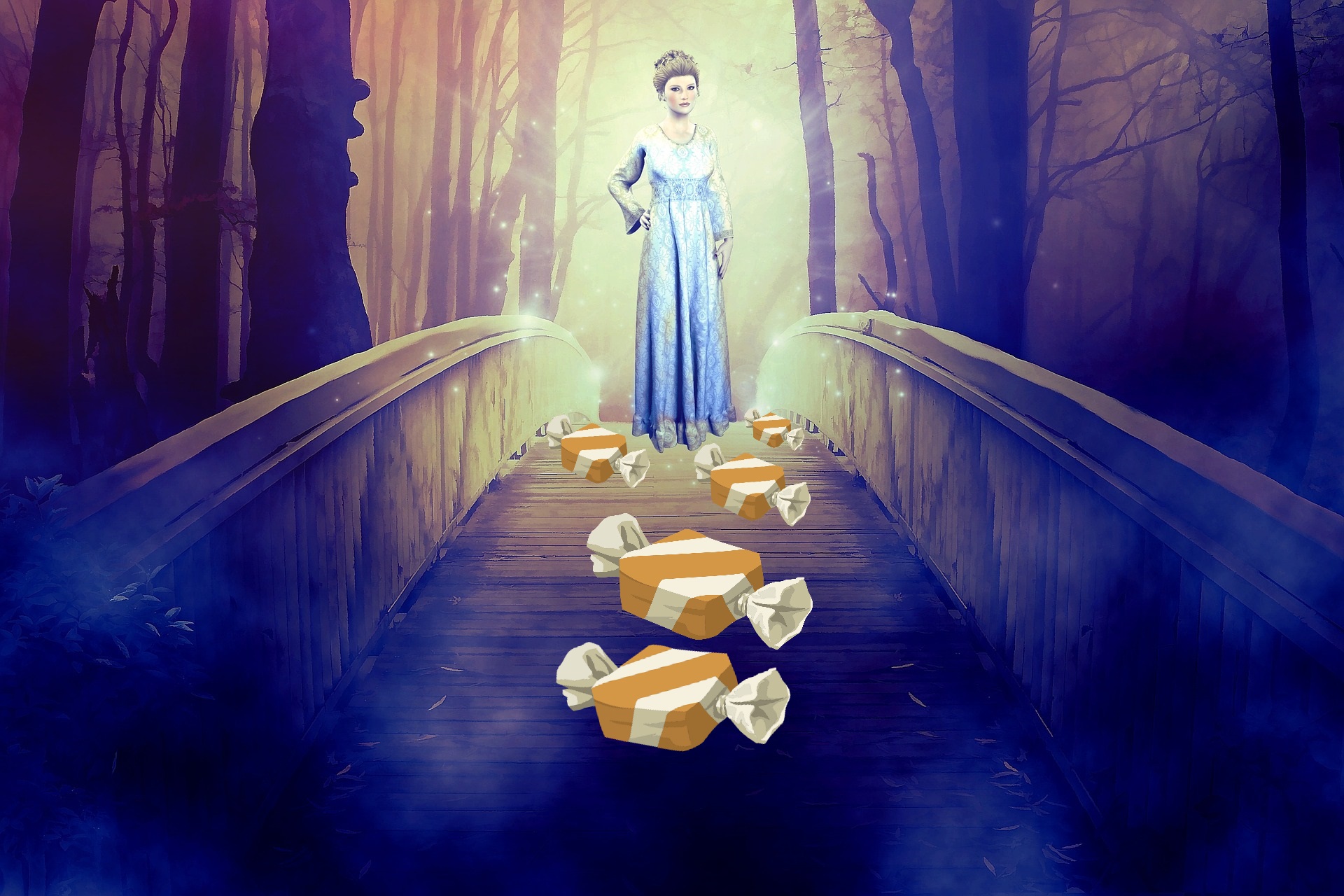
Emerging from the small town of Terrell in Kaufman County, just east of Dallas, this urban legend weaves a macabre thread through generations of whispered warnings to children: Don't take candy from strangers. What begins as a seemingly innocent treat turns into a lure for something far more sinister—a spectral figure who preys on the innocent with promises of play and sugar-coated doom. Rooted in a kernel of tragic truth from the late 19th century, the Candy Lady's legend endures as one of the Lone Star State's creepiest cautionary tales.
At the heart of the legend lies Clara Crane, a real woman whose life unraveled in the harsh realities of rural Texas around the turn of the 20th century. Born in 1871 in Terrell, Clara lived a simple farm life with her much older husband, Leonard, and their only child, a young daughter named Marcella. Tragedy struck when Marcella died in a devastating accident—details vary, but the loss shattered Clara's world. Blaming her husband for the girl's death, Clara harbored a seething resentment that festered for two agonizing years.
In 1895, driven by grief and madness, Clara exacted her revenge in a way that would later echo through legend: she poisoned Leonard with his favorite treat—caramel candies laced with arsenic. The murder made headlines across the region, a shocking betrayal in the quiet farming community. Convicted of first-degree murder, Clara avoided the gallows or life in prison. Instead, her unraveling mental state led to commitment in the North Texas Lunatic Asylum (now Terrell State Hospital), a sprawling institution just miles from her home.
She remained there for four years, her sanity fraying further in the asylum's overcrowded wards. Then, in 1899, bureaucratic indifference set her free: released due to severe overcrowding, Clara vanished into the shadows of Terrell, returning quietly to her abandoned farm. What happened next blurred the boundaries of fact and folklore, transforming Clara from a grieving widow into the monstrous Candy Lady.
The legend ignites in 1903, mere years after Clara's release. Children in Terrell began reporting eerie gifts: individually wrapped candies appearing overnight on their windowsills, as if left by a benevolent fairy. At first, the treats seemed harmless—hard candies, caramels, simple sweets that no child could resist. The kids, thrilled by the mystery, kept it secret from their parents, sneaking bites under the cover of night.
But innocence curdled into terror as the deliveries evolved. Notes began accompanying the candy, scrawled in elegant, feminine handwriting. Early messages were innocuous: "From the Candy Lady." Soon, they grew insistent, pleading: "Come outside and play with me." Children who succumbed to the invitation vanished without a trace, their empty beds and uneaten breakfasts the only clues left behind.
Over the next decade, a handful of youngsters disappeared—estimates range from a few to a dozen—plunging Terrell into paranoia. Parents barred windows and doors, forbidding play after dusk. Whispers spread like wildfire: the Candy Lady was no fairy, but a vengeful wraith, luring the young to her decrepit farmhouse for unspeakable horrors. Some versions claim she harvested their teeth to craft grotesque necklaces; others insist she stabbed out their eyes with a fork, mirroring the utensil she once used to stir her poisoned caramels.
The vanishings weren't mere ghost stories; they tapped into primal fears of the unknown in an era when child abductions were all too real and unsolved. Terrell's isolation amplified the dread—farms scattered across cotton fields, with little law enforcement to intervene.
As panic gripped the town, the local sheriff stepped in, vowing to unmask the culprit. He scoured the Crane property, interviewing terrified children and piecing together tales of the spectral benefactor. But the Candy Lady struck back with ruthless finality. One fateful night, the sheriff vanished during his patrol.
Days later, his body was discovered in a roadside ditch, the scene a tableau of nightmare fuel. His eyes had been viciously gouged with a fork, and his pockets bulged with half-eaten candies—taunting signatures of his killer. The brutality shocked Terrell to its core, cementing the legend's darkest chapter. Was this Clara's handiwork, a madwoman's retaliation against those hunting her? Or had the story evolved into something supernatural, a curse born of her unquenched grief?
Remarkably, the disappearances ceased after the sheriff's murder. No more candies on sills, no more midnight invitations. Life in Terrell limped back to normal, but the scars lingered.
Clara Crane's fate remains a mystery—no records confirm her death or further crimes, fueling speculation that she simply faded into obscurity, her madness spent. Yet the Candy Lady endures, passed down like a family heirloom in Terrell households. Grandparents still invoke her name to scold misbehaving kids: "Be good, or the Candy Lady will leave you a treat you can't refuse." In the 1940s, one grandmother recalled the tale scaring her so thoroughly that she'd flood her room with lights to ward off the dark. Even today, when a child goes missing in Kaufman County, locals murmur, "The Candy Lady got 'em."
The legend's power lies in its duality: a sliver of verifiable history—Clara's trial and institutionalization—embellished with gothic flourishes that prey on our deepest anxieties about trust and the familiar turned foul. It's a twisted inversion of the Tooth Fairy, where sweets aren't rewards but bait. In a state rich with ghostly yarns—from the Goatman of Denton to the Marfa Lights—the Candy Lady stands out for its intimate horror, a reminder that monsters often hide behind the sweetest smiles.
Terrell's streets hum with echoes of her story. Whether Clara Crane was a victim of circumstance, a perpetrator of evil, or something in between, one thing is certain: in the annals of Texas tall tales, the Candy Lady's lure remains irresistibly, terrifyingly sweet. Sweet dreams, Texas—and keep those windows locked.
Sources:
"Candy Lady." Urban Legends Wiki, Fandom, urbanlegend.fandom.com/wiki/Candy_Lady. Accessed 1 Dec. 2025.
"Clara Crane - Urban Legend - Candy Lady." Candy Lady Film, candyladyfilm.com/about/. Accessed 1 Dec. 2025.
Davis, Dusty. "The Candy Lady." Haunt Jaunts, 27 Apr. 2023, www.hauntjaunts.net/the-candy-lady/.
Obscure Horror. "The Dark and Sinister Legend of The Candy Lady Clara Crane." Medium, 28 Aug. 2022, medium.com/obscure-horror/the-dark-and-sinister-legend-of-the-candy-lady-clara-crane-a0e975329793.
Parmiter, Cindy. "Ghosts of the Past: The Haunting Legacy of Murderess Clara Crane." Medium, 4 Nov. 2024, medium.com/@cindyparmiter/ghosts-of-the-past-the-haunting-legacy-of-murderess-clara-crane-ab66252e3c34.
Paranormal Housewife. "Not Always A Sweet Ending." Paranormal Housewife, 25 Jan. 2022, paranormalhousewifeblog.wordpress.com/2022/01/25/not-always-a-sweet-ending/.
Reid, Terri. "The Candy Lady." Terri Reid, terrireid.com/the-candy-lady/. Accessed 1 Dec. 2025.
"The Candy Lady is One of the Creepiest Urban Legends in Texas." OnlyInYourState, 4 Dec. 2024, www.onlyinyourstate.com/state-pride/texas/candy-lady-urban-legend-tx.
"The Haunting Tale of Clara Crane." Terrell Ghosts, 24 July 2025, www.terrellghosts.com/blog/haunted-terrell-10/the-haunting-tale-of-clara-crane-139.


Comments
Post a Comment