October 3-Loch Ness Monster
By Aaron Perez
Published 10/3/2025
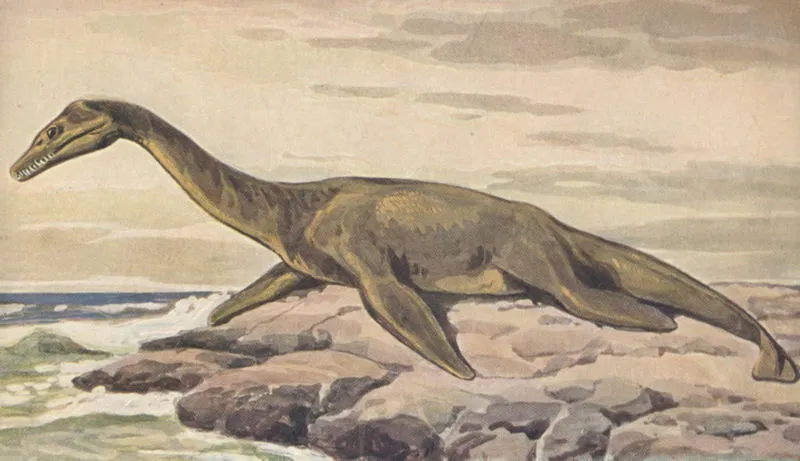
Nestled in the Scottish Highlands, Loch Ness is a deep, freshwater lake stretching 23 miles long and over 700 feet deep in places, making it one of the largest bodies of water in the United Kingdom. Yet, it’s not the lake’s size or scenic beauty that draws global attention—it’s the enduring legend of the Loch Ness Monster, affectionately nicknamed "Nessie." For nearly a century, this elusive creature has captured imaginations, sparked debates, and fueled both skepticism and belief. Is Nessie a prehistoric survivor, a misidentified animal, or a clever hoax? Let’s dive into the history, evidence, and cultural impact of this iconic cryptid.
Tales of a mysterious creature in Loch Ness date back centuries. One of the earliest references comes from the 6th century, in the Life of St. Columba by Adomnán. The text describes how St. Columba, an Irish monk, encountered a "water beast" in the River Ness around 565 AD. According to the account, Columba miraculously stopped the creature from attacking a man by invoking divine power. While this story is rooted in religious hagiography rather than scientific observation, it planted the seed for the idea of a strange entity in the region’s waters.
The modern Nessie phenomenon, however, began in the 1930s. In 1933, a sighting reported by George Spicer and his wife sparked widespread interest. They claimed to have seen a large creature with a long neck crossing the road near the loch, describing it as unlike any known animal. This account, published in local newspapers, ignited public fascination and set the stage for Nessie’s rise to fame.
The most famous piece of evidence for the Loch Ness Monster is the 1934 "Surgeon’s Photograph," taken by Dr. Robert Kenneth Wilson. The image shows a dark, serpentine head and neck emerging from the water, resembling a plesiosaur—a long-extinct marine reptile. Published in the Daily Mail, the photograph became a global sensation and remains the definitive image of Nessie. Decades later, in 1994, the photo was revealed as a hoax. Marmaduke Wetherell, a big-game hunter, and his stepson Christian Spurling confessed to creating the image using a toy submarine fitted with a carved wooden head. Despite the debunking, the photograph’s impact endures, shaping the popular image of Nessie as a long-necked, aquatic creature.
Over the years, thousands of people have reported sightings of something unusual in Loch Ness. Descriptions vary, but common features include a large body, humps breaking the water’s surface, and a long neck. Some witnesses claim to have seen flippers or a tail, reinforcing the plesiosaur comparison. However, many sightings are fleeting, occurring in poor visibility or at a distance, making verification difficult.
Scientific efforts to find Nessie have been extensive but inconclusive. In the 1960s and 1970s, researchers used sonar to detect large, moving objects in the loch’s depths, with some intriguing but ambiguous results. In 1987, "Operation Deepscan" deployed a fleet of boats with sonar equipment across the loch, detecting unexplained large objects but failing to confirm a creature. More recently, in 2018, a DNA survey of Loch Ness by New Zealand scientist Neil Gemmell found no evidence of plesiosaur DNA but detected significant amounts of eel DNA, leading to speculation that oversized eels could explain some sightings.
Modern technology, including drones, underwater cameras, and environmental DNA sampling, has continued the search. In 2023, one of the largest organized hunts for Nessie, involving hundreds of volunteers and global livestreams, yielded no definitive evidence but kept the legend alive.
What could Nessie be? Several theories attempt to explain the phenomenon:
- Prehistoric Survivor: The romantic notion that Nessie is a plesiosaur or similar ancient creature persists, despite the lack of fossil evidence for such survivors. Loch Ness formed about 10,000 years ago during the last Ice Age, and critics argue it’s unlikely a marine reptile could survive in a freshwater environment with limited food resources.
- Misidentified Animals: Many sightings may be explained by known animals. Large fish like sturgeon, seals, or otters could create unusual shapes in the water. The 2018 DNA study suggested that giant eels, which can grow to impressive sizes, might account for some reports.
- Optical Illusions and Natural Phenomena: Loch Ness’s murky waters, combined with waves, floating logs, or boat wakes, can create deceptive shapes. Atmospheric conditions like mirages could also distort perceptions.
- Hoaxes and Imagination: Some sightings and photos, like the Surgeon’s Photograph, were deliberate fakes. Others may stem from wishful thinking or the power of suggestion, as Nessie’s fame primes visitors to see something extraordinary.
- Cultural Myth: Nessie may be a modern folklore, blending ancient Celtic water-beast myths with 20th-century media hype. The creature serves as a symbol of mystery in an increasingly explained world.
The monster is also a major driver of tourism. Loch Ness attracts hundreds of thousands of visitors annually, boosting the local economy. The village of Drumnadrochit, near the loch, hosts the Loch Ness Centre & Exhibition, where visitors can explore the history of Nessie and the science behind the searches. Boat tours, Nessie-themed souvenirs, and even a dedicated Nessie webcam keep the legend accessible to a global audience.
The Loch Ness Monster sits at the intersection of science and folklore. Skeptics argue that the lack of concrete evidence—fossils, bones, or clear images—disproves Nessie’s existence. The loch’s ecosystem, they say, couldn’t support a large predator, and many sightings are likely misidentifications or hoaxes. Believers, however, point to the loch’s immense depth and unexplored corners, insisting that an unknown creature could still lurk there. The absence of evidence, they argue, is not evidence of absence.
For many, Nessie’s appeal lies not in proof but in possibility. The idea of an undiscovered creature in a world mapped by satellites and algorithms is irresistibly romantic. Nessie represents a mystery that invites wonder, skepticism, and storytelling in equal measure.
Social media and platforms like X have kept Nessie relevant. Posts about new sightings, drone footage, or quirky theories regularly circulate, often accompanied by hashtags like #LochNessMonster or #NessieWatch. In 2025, X users shared blurry photos and videos claiming to show humps or shadows in the loch, though none have been verified. The platform also hosts debates between skeptics and enthusiasts, with some users humorously suggesting Nessie is “just a really shy eel.”
The Loch Ness Monster remains one of the world’s most enduring mysteries. Whether Nessie is a plesiosaur, a giant eel, a log, or a legend, the creature’s allure lies in its ability to spark curiosity and imagination. As technology advances and searches continue, the truth about Nessie may one day surface—or remain forever submerged in the depths of Loch Ness. Until then, the monster will continue to swim through our stories, reminding us that some mysteries are worth believing in, even if they’re never solved.
Sources:
"Loch Ness Monster." Wikipedia, Wikimedia Foundation, 30 Sept. 2025, en.wikipedia.org/wiki/Loch_Ness_Monster.
"Loch Ness Monster: Myth or Reality?" Colorado Arts and Sciences Magazine, U of Colorado Boulder, 27 Nov. 2023, www.colorado.edu/asmagazine/2023/11/27/loch-ness-monster-myth-or-reality.
"Loch Ness Monster May Be a Giant Eel, Say Scientists." BBC News, BBC, 5 Sept. 2019, www.bbc.com/news/uk-scotland-highlands-islands-49495145.
"Loch Ness Monster (Cryptozoology)." EBSCO Research Starters, EBSCO, www.ebsco.com/research-starters/zoology/loch-ness-monster-cryptozoology. Accessed 3 Oct. 2025.
"Scientists to Lead DNA Hunt for Loch Ness Monster." The Guardian, Guardian News and Media, 23 May 2018, www.theguardian.com/uk-news/2018/may/23/scientists-dna-hunt-loch-ness-monster-scotland.
"The Loch Ness Monster Turns 83: The Story of The Surgeon’s Photograph." Don't Take Pictures, 19 Apr. 2017, www.donttakepictures.com/dtp-blog/2017/4/19/the-loch-ness-monster-turns-83-the-story-of-the-surgeons-photograph.
Bauer, Patricia. "Loch Ness Monster." Encyclopædia Britannica, Encyclopædia Britannica, Inc., 23 Aug. 2017, www.britannica.com/topic/Loch-Ness-monster-legendary-creature.
Bermúdez, Fernando. "Is There Any Truth Behind the Legend of the Loch Ness Monster?" National Geographic, National Geographic Society, 23 Oct. 2024, www.nationalgeographic.com/history/article/loch-ness-monster-legend.
"90 Years: The First Photo of the Loch Ness Monster." British Online Archives, 11 Dec. 2023, britishonlinearchives.com/posts/category/notable-days/687/90-years-the-first-photo-of-the-loch-ness-monster.
"Loch Ness Monster Picture Is a Fake, Photographer Admits." The Guardian, Guardian News and Media, 30 Nov. 2017, www.theguardian.com/uk-news/2013/oct/04/loch-ness-monster-picture-fake.


Comments
Post a Comment