October 27-Poltergeist
Published by Aaron Perez
Published 10/27/2025
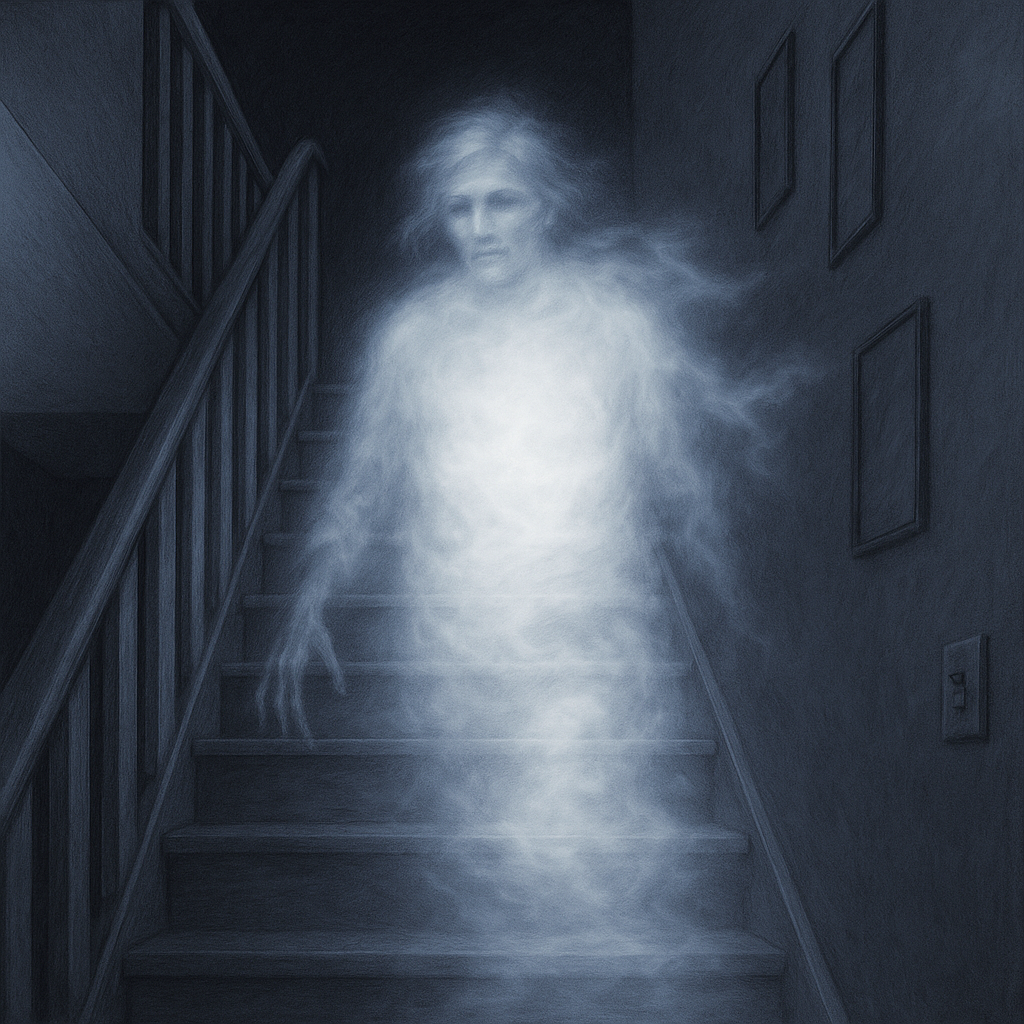
Poltergeists, often translated from German as "noisy ghosts" or "rumble-ghosts," are supernatural entities believed to cause physical disturbances in the environment. These disturbances can include loud noises, objects being thrown or moved, furniture levitating, and even physical assaults like pinching or hitting people. Unlike traditional ghosts that might appear visually, poltergeists are more known for their chaotic, interactive behaviors, such as creating foul smells, starting spontaneous fires, or interfering with electronics. Reports of such phenomena date back to ancient times and span cultures worldwide, from Europe to Brazil, Australia, and Japan. While popularized in horror films and media, the reality behind poltergeists remains a topic of intense debate, blending folklore, psychology, and science. In this blog, we'll explore their history, delve into some infamous cases, and examine both paranormal and skeptical explanations.
A Brief History of Poltergeists
The concept of poltergeists has roots in German folklore, where they were seen as malicious spirits responsible for unexplained noises and object movements. The earliest documented cases trace back to the 1st century, with reports appearing in various cultures over millennia. In Finland, for instance, 19th-century accounts like the "Devils of Martin" in Ylöjärvi involved court affidavits describing disturbances, while the "Mäkkylä Ghost" in 1946 garnered press attention for similar activity. During the Scientific Revolution, even prominent figures interpreted these events through a religious lens, viewing them as demonic interventions rather than natural occurrences. By the 19th and 20th centuries, poltergeist reports shifted toward psychological and paranormal investigations, with researchers like those from the Society for Psychical Research documenting cases in legal and media records. Today, the term encompasses a wide range of alleged supernatural events, though skeptics often attribute them to hoaxes or misinterpretations.
Famous Poltergeist Cases
Throughout history, several cases have captured public imagination due to their intensity and the number of witnesses involved. Here are a few standout examples.
The Enfield Poltergeist (1977–1979)
One of the most well-documented cases occurred in a council house in Enfield, London, involving the Hodgson family, particularly sisters Janet (11) and Margaret (13). It began in August 1977 when mother Peggy Hodgson reported furniture moving on its own and knocking sounds, prompting a police visit where an officer witnessed a chair sliding inexplicably. Over 18 months, over 30 witnesses—including neighbors, journalists, and investigators—claimed to see objects thrown, furniture overturned, and the girls levitating. Disembodied voices, often gruff and male, were recorded, with one identifying itself as "Bill Wilkins," a former resident who died in the house in 1963. Investigators from the Society for Psychical Research, like Maurice Grosse and Guy Lyon Playfair, documented the events but noted possible trickery, such as Janet bending spoons or simulating voices. Skeptics, including magician Milbourne Christopher, attributed it to pranks by the girls, who admitted to faking some incidents before retracting. The case inspired films like The Conjuring 2 and remains divisive.
The Battersea Poltergeist (1956–1968)
In Battersea, London, 15-year-old Shirley Hitchings experienced a decade-long haunting at 63 Wycliffe Road, starting with a mysterious silver key on her pillow and escalating to banging noises, scratching sounds, and moving objects. The family named the entity "Donald," who communicated via tapping, alphabet cards, and thousands of handwritten notes—up to 60 per day—often in French. Donald claimed to be Louis XVII of France and made demands, like dressing Shirley in courtly clothes or contacting an actor, leading to violent acts such as spontaneous fires and trashed rooms. Paranormal investigator Harold Chibbett documented the events, while media scrutiny included strip-searches and TV broadcasts. The activity waned after Shirley married and moved away in 1965, ceasing entirely by 1968 when the house was demolished. Handwriting experts suggested Shirley authored the notes, pointing to possible fabrication amid emotional stress.
Other Notable Cases
- Epworth Rectory (1716–1717): In England, the Wesley family reported hauntings with knocking and furniture movement, one of the earliest detailed accounts.
- Rosenheim Poltergeist (1967): In Germany, a secretary's office saw objects move and electrical issues, later suspected to be faked with nylon threads.
- Thornton Heath (1938): Investigated by Nandor Fodor, who linked it to psychological repressions rather than spirits.
These cases often center on adolescents, particularly females under stress, and typically last from months to years.
Scientific and Skeptical Explanations
While some view poltergeists as genuine paranormal activity, science offers grounded alternatives. Many cases are dismissed as hoaxes, with trickery by juveniles—often called the "naughty little girl" theory—being common. Psychological factors like dissociation, hallucinations, or wishful thinking can amplify ordinary events into supernatural ones.
Specific scientific insights include:
- Infrasound: Low-frequency sounds below 20 Hz can cause anxiety, hallucinations, and even make objects vibrate, mimicking poltergeist movements.
- Electromagnetic Fields: Anomalous EMF variations may induce sensations of a "presence" or interfere with electronics.
- Carbon Monoxide Poisoning: Leaks can lead to hallucinations of voices or figures, as in a 1921 family case resolved by fixing a furnace.
- Sleep Paralysis: This state causes terrifying hallucinations and immobility, often interpreted as attacks by entities.
- Power of Suggestion: Group belief can escalate minor incidents, with studies showing confident claims influencing others' perceptions.
Environmental factors, like underground water causing vibrations or ball lightning moving objects, also provide natural explanations. Skeptics argue that without controlled conditions, eyewitness accounts are unreliable.
Paranormal Theories
On the flip side, parapsychologists like William G. Roll propose poltergeists stem from psychokinesis—unconscious mental energy from stressed individuals, often adolescents. Others see them as spirits of the dead or demonic forces responding to exorcisms. In Spiritism, they're viewed as low-level disembodied spirits tied to elements like fire or water. These theories lack empirical evidence but persist due to unexplained elements in some cases.
Conclusion
Poltergeists continue to fascinate and frighten, bridging the gap between the supernatural and the explainable. Whether you lean toward ghostly interventions or scientific rationales, the stories remind us of the human mind's power to interpret the unknown. As investigations evolve, perhaps we'll uncover more truths—or more mysteries.
Sources:
"Poltergeist." Wikipedia, Wikimedia Foundation, 3 Oct. 2024, https://en.wikipedia.org/wiki/Poltergeist.
Houran, James, and Rense Lange. "Poltergeist Phenomena: Psychological and Paranormal Explanations." Transpersonal Psychology Research Review, IResearchNet, n.d., https://transpersonal-psychology.iresearchnet.com/parapsychology-and-the-paranormal/poltergeist-phenomena-psychological-and-paranormal-explanations/.
"The Naturalization of the 'Poltergeist'." Forbidden Histories, Andreas Sommer, 23 Sept. 2013, https://www.forbiddenhistories.com/2013/09/the-naturalisation-of-the-poltergeist/.
"Enfield Poltergeist." Wikipedia, Wikimedia Foundation, 23 Oct. 2024, https://en.wikipedia.org/wiki/Enfield_poltergeist.
"Battersea Poltergeist (1956)." Psi Encyclopedia, Society for Psychical Research, 30 Dec. 2022, https://psi-encyclopedia.spr.ac.uk/articles/battersea-poltergeist-1956.
"Rosenheim Poltergeist Claim." Wikipedia, Wikimedia Foundation, 10 Sept. 2024, https://en.wikipedia.org/wiki/Rosenheim_poltergeist_claim.
"Old Rectory, Epworth." Wikipedia, Wikimedia Foundation, 15 Aug. 2024, https://en.wikipedia.org/wiki/Old_Rectory,_Epworth.
"Science of Hauntings: Ghosts, Spirits, and Hauntings (Beginner's Guide)." US Ghost Adventures, US Ghost Adventures, 11 Oct. 2024, https://usghostadventures.com/haunted-stories/science-of-hauntings-ghosts-spirits-and-hauntings-beginners-guide/.
"The Enfield Poltergeist: Why the Unexplained Mystery That Shocked 1970s Britain Continues to Disturb." BBC Culture, BBC, 26 Oct. 2023, https://www.bbc.com/culture/article/20231026-the-enfield-poltergeist-why-the-unexplained-mystery-that-shocked-1970s-britain-continues-to-disturb.


Comments
Post a Comment