October 23-Fae
Published by Aaron Perez
Published 10/23/2025
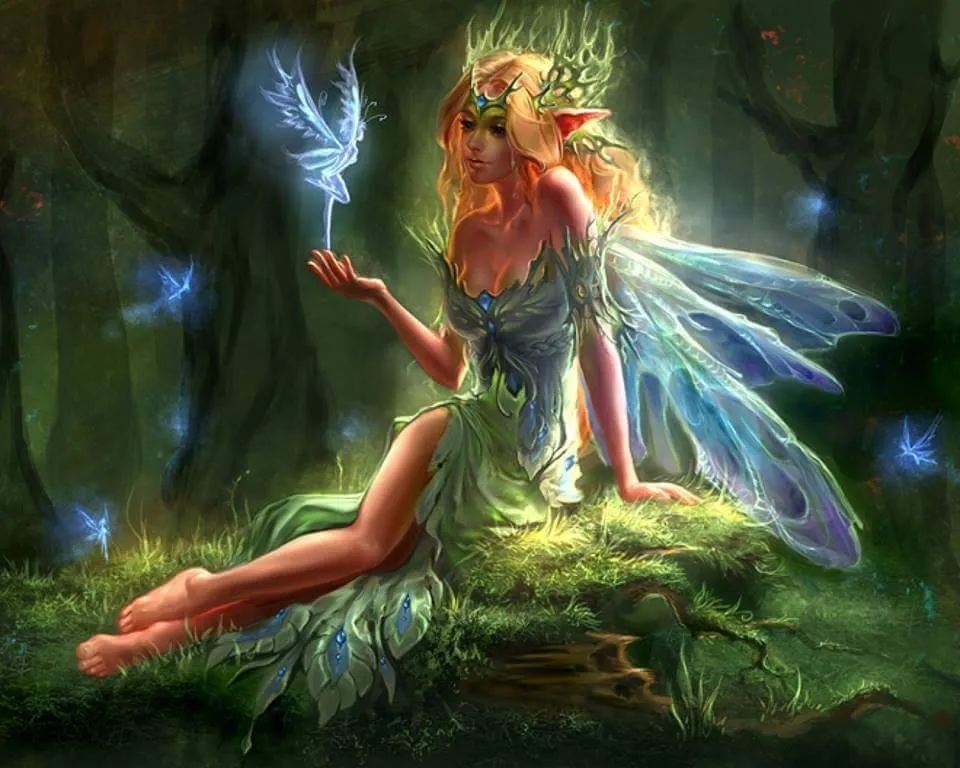
Often romanticized in modern stories as twinkling, benevolent sprites, the Fae of traditional mythology and folklore are far more complex—mysterious beings that embody the whims of nature, capable of both kindness and cruelty. From ancient Celtic tales to Germanic legends, these supernatural entities have haunted human imagination for centuries, serving as explanations for the unexplainable in a pre-scientific world. In this blog, we'll uncover their origins, characteristics, various types, and enduring legends, drawing on historical folklore to separate fact from fantasy.
The concept of the Fae, also known as fairies or the "fair folk," has roots stretching back to ancient European traditions, particularly in Celtic, Germanic, and Slavic cultures. The English word "fairy" derives from the Old French "faierie," meaning a realm of enchantment, ultimately linked to the Latin "fata" (fates), referring to magical women skilled in herbs, stones, and incantations. In folklore, they were often euphemistically called the "good folk" or "people of peace" to avoid offending them.
Theories about their origins vary widely. Some view them as demoted pagan deities, like the Irish Tuatha Dé Danann, a race of supernatural beings who retreated to underground mounds after being defeated by human invaders. Others see them as fallen angels trapped between Heaven and Hell, souls of unbaptized children, or even prehistoric small-statured humans, inspired by archaeological finds like Homo floresiensis. In Norse and Germanic myths, they overlap with elves and nature spirits, personifying environmental dangers and forces. By the Middle Ages, fairies appeared in romances and ballads, evolving through the Elizabethan era—where Shakespeare blended them with elves in A Midsummer Night's Dream—to the Victorian period, when they became diminutive, winged figures in children's tales. This shift was influenced by industrialization, turning folklore into nostalgic escapism.
Characteristics of the Fae
Unlike the cute, helpful fairies of Disney, traditional Fae are amoral entities, neither purely good nor evil, but governed by their own inscrutable rules. They are deeply connected to the natural world, often embodying the spirit of places like forests, rivers, or mountains. Shapeshifting is common—they might appear as humans, animals, or even giants— and they possess magical abilities, from illusion-casting to time manipulation. Wings are a modern addition; in folklore, they flew via spells or rode on ragwort stems.
Fae are capricious and trickster-like, delighting in pranks such as leading travelers astray with will-o'-the-wisps or tangling hair into "fairy locks." They can be benevolent, aiding the deserving, but offend them, and retribution follows—illness, misfortune, or abduction. Their realm, often called the Otherworld or Fairyland, is a parallel dimension accessed through liminal spaces like fairy mounds or rings, where time flows differently.
Types of Fae Creatures
Folklore classifies Fae in various ways, often by habitat or disposition. In Scottish lore, they're divided into the Seelie Court (generally benevolent but still dangerous) and the Unseelie Court (malevolent and harmful). Here's a look at some prominent types:
- Brownies: Solitary household helpers from Scottish and English folklore, small and hairy, who perform chores at night in exchange for milk or porridge. Insult them with clothing, and they may turn into mischievous boggarts.
- Banshees (Bean Sidhe): Irish wailing women who foretell death in ancient families, often seen as ancestral spirits rather than ghosts.
- Pixies: Mischievous, winged sprites from Cornish and Devon lore, fond of gardens and wildflowers. They pinch the lazy but can be warded off with iron.
- Elves: Tall, elegant beings from Norse mythology, sometimes god-like, who travel in troops and wield powerful magic. They range from helpful to deadly.
- Leprechauns: Solitary Irish males guarding pots of gold at rainbow's end, known for shoemaking and granting wishes— if you can catch one.
- Gnomes: Earth elementals living in tree roots, protective of their domains and associated with mining and treasures.
Other variants include water spirits like the Germanic Nix or Slavic Leshy, forest guardians who mislead intruders.
Legends and Folklore Tales
Fae legends are rich with warnings and wonders. Changelings are a chilling motif: Fae stealing human babies and replacing them with sickly imitations, explaining disabilities or illnesses in folklore. Protective charms included iron, rowan wood, salt, or four-leaf clovers.
Fairy rings—circles of mushrooms or grass—mark their dancing grounds; stepping inside risks being trapped in their realm. Irish fairy mounds (sídhe) are portals to the Otherworld, home to the Aos Sí, and disturbing them invites doom. Tales like "Tam Lin" tell of mortals rescuing loved ones from Fae captivity, while "Thomas the Rhymer" describes seven years in Elfland, returning with prophetic gifts.
Offerings such as milk, bread, or fruit can attract benevolent Fae, but never eat their food, lest you be bound forever. Pacts with Fae are binding but tricky, often involving tithes or loopholes.
Modern Interpretations and Legacy
Today, Fae inspire countless books, films, and art—from J.R.R. Tolkien's elves to J.M. Barrie's Tinker Bell in Peter Pan. Victorian artists like Arthur Rackham and Brian Froud captured their whimsy and darkness, while modern fantasy like Sarah J. Maas's series reimagines them as powerful courts. Yet, folklore's Fae remind us of humanity's respect for nature's unpredictability.
In a world of science, the Fae endure as symbols of mystery, urging us to tread carefully in the wild unknown. Whether you believe or not, next time you spot a mushroom circle, think twice before stepping in—who knows what enchantment awaits?
Sources:
Cristea, Leo Elijah. "Faeries and Folklore – Part One: An Introduction." Fantasy-Faction, 21 Apr. 2014, fantasy-faction.com/2016/faeries-and-folklore-part-one-an-introduction.
"The Fae Folk: Your ULTIMATE Guide to Fairies." Otherworldly Oracle, otherworldlyoracle.com/the-fae-folk/. Accessed 23 Oct. 2025.
Wigington, Patti. "Faerie Lore: The Fae at Beltane." Learn Religions, 3 Sept. 2021, www.learnreligions.com/lore-about-fae-at-beltane-2561643.
H., Sian. "The Real Fae of Europe: Separating Folklore from Fantasy." Mythfolks, 21 Sept. 2025, www.mythfolks.com/fae-folklore.
Rainbolt, Dawn. "Irish Folklore, Myth & Legend: The Fairies." Wilderness Ireland, www.wildernessireland.com/blog/irish-folklore-fairies/. Accessed 23 Oct. 2025.
-M. "A Brief History of Faeries." Imaginings of a Child, 4 Oct. 2018, imaginingsofachild.wordpress.com/2018/10/04/a-brief-history-of-faeries/.


Comments
Post a Comment