El Morro
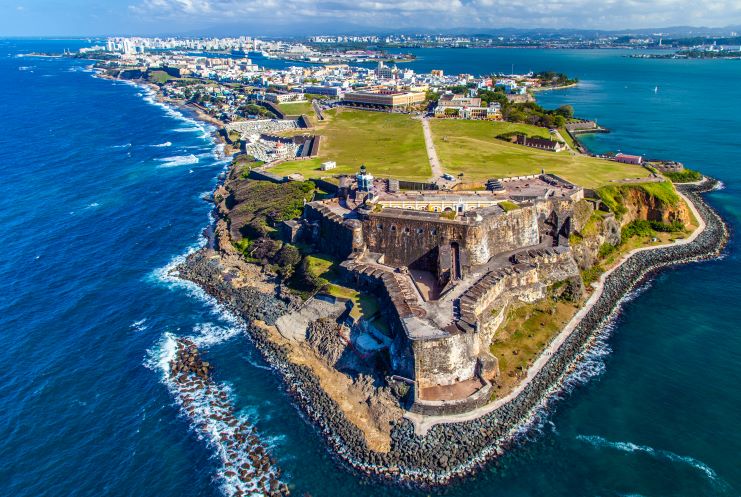
Nestled on a rocky promontory at the entrance to San Juan Bay, Castillo San Felipe del Morro—affectionately known as El Morro—stands as one of Puerto Rico's most iconic landmarks. This massive 16th-century Spanish fortress, with its thick sandstone walls, multi-level batteries, and sweeping ocean views, has guarded the island for centuries. Today, it draws millions of visitors who come for its rich history, stunning architecture, and UNESCO World Heritage status. But after dark, or even on bright sunny days, many report that El Morro is far from quiet. It is widely regarded as Puerto Rico's most haunted site, where the echoes of battles, prisoners, and lost souls refuse to fade.
:max_bytes(150000):strip_icc()/GettyImages-1197518608-7d70588309a04fb5b3a299f27c98ff2a.jpg)
A Brief History of Blood and Defense
Construction of El Morro began in 1539 under orders from King Charles I of Spain. It started as a simple fortified tower but evolved into a formidable citadel by the late 18th century, featuring six levels, thick walls (up to 40 feet in places), cisterns, and dozens of cannons. Portuguese soldiers formed the first garrison in 1593, and over time, the fort withstood numerous assaults: Sir Francis Drake's failed sea attack in 1595, a Dutch siege in 1625 that left the city burned but the fort intact, British invasions in 1598 and 1797, and finally U.S. naval bombardment in 1898 during the Spanish-American War.
The fortress served not only as a military stronghold but also as a prison. Famous pirate Roberto Cofresí was held and executed here in 1825. Under U.S. control, it became part of Fort Brooke, with additions like a lighthouse and WWII bunkers. Its long history of warfare, disease, executions, and confinement has left a heavy imprint—many believe this violent past fuels the paranormal activity reported within its walls.
The Lady in White: A Mourning Specter on the Ramparts
One of the most persistent legends at El Morro is the Woman in White (or "La Dama Blanca"). Witnesses describe a figure in a flowing white dress gliding silently along the fortress ramparts, especially at night. Her face is often obscured or unseen. Local lore suggests she is the ghost of a woman who lost her lover in one of the many sea battles that raged near the bay. Heartbroken, she wanders the walls still searching for him, her ethereal form blending with the sea mist and moonlight.
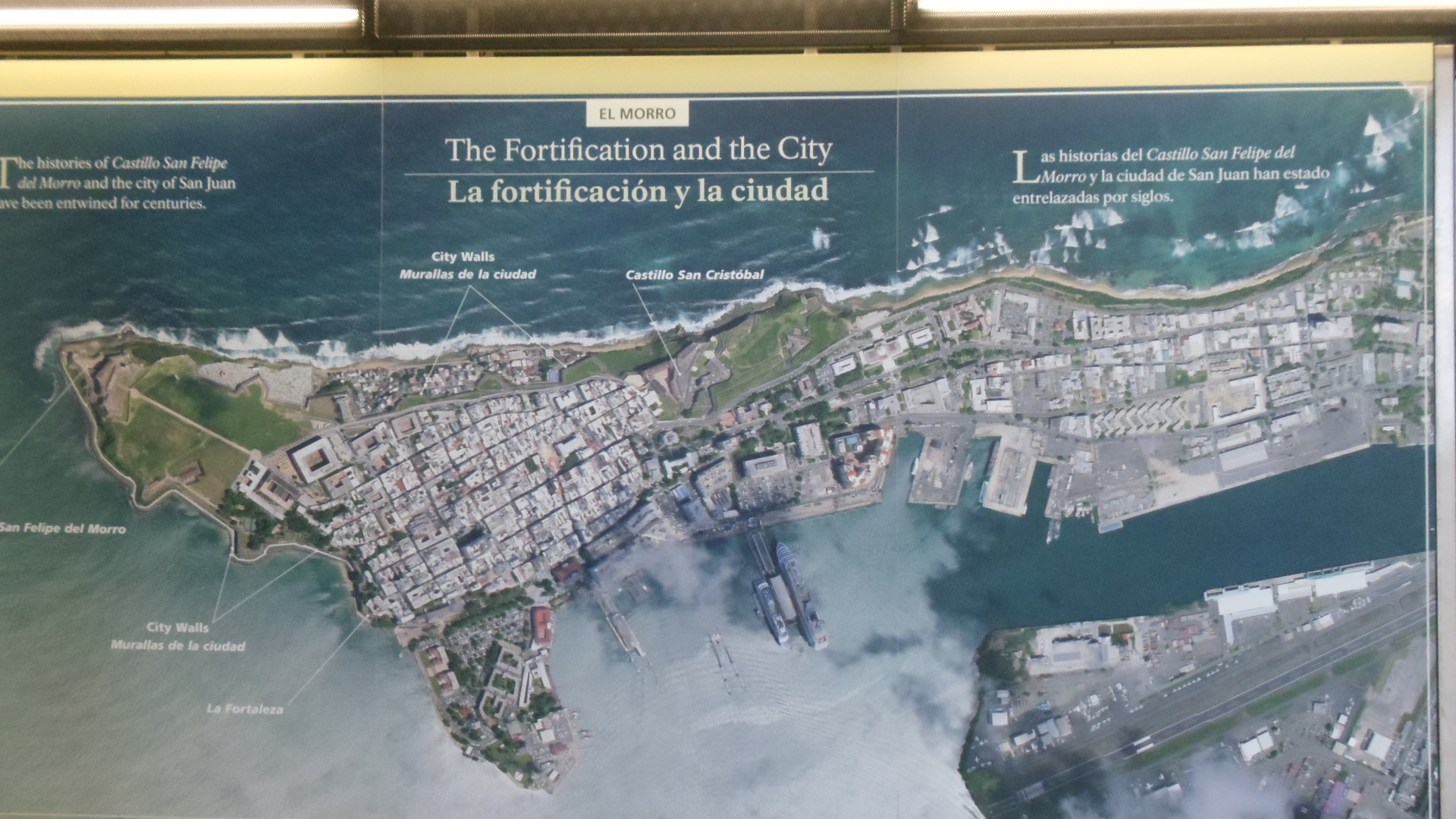
Visitors and employees alike have spotted her pacing the battlements or near the lighthouse area. Some accounts link similar sightings to the nearby Santa Maria Magdalena de Pazzis Cemetery, whose graves overlook the ocean just beyond the fort—perhaps drawing restless spirits across the grounds.

Spectral Soldiers and Vanishing Guards
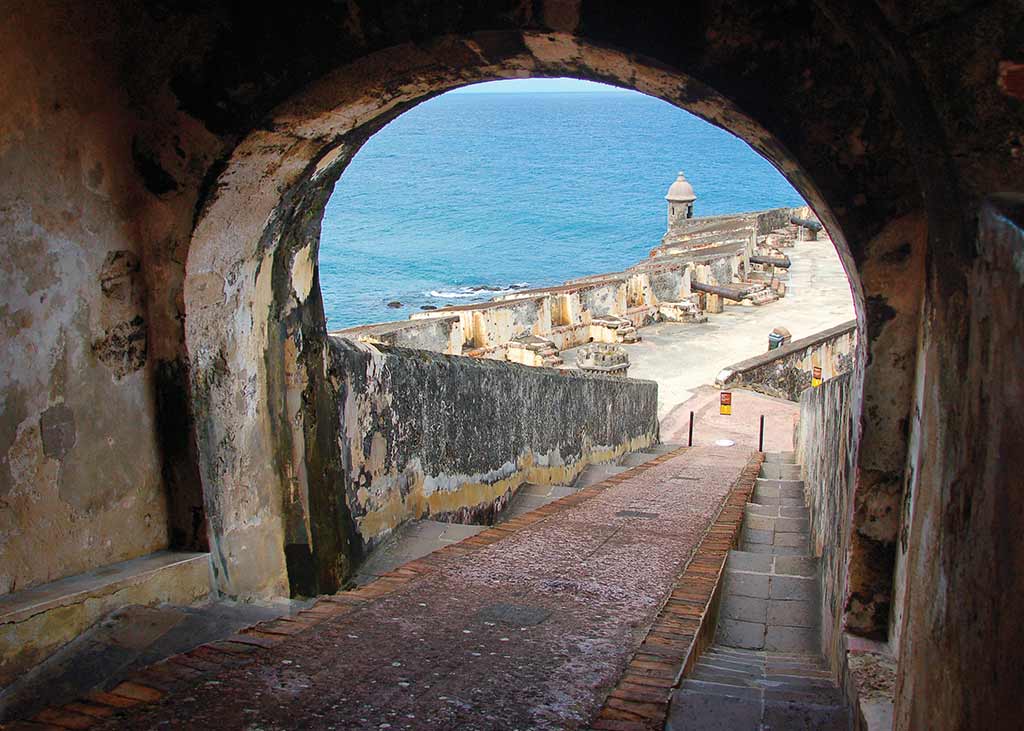
Spanish soldiers who died defending El Morro are said to linger on duty long after their mortal service ended. Apparitions of uniformed figures have been reported strolling the ramparts, standing watch in sentry boxes, or marching through courtyards. Some witnesses claim these ghostly sentries disappear into walls or fade when approached.
Related legends (sometimes associated with the connected San Cristóbal fortress but echoed in El Morro tales) speak of guards who vanished without trace during night watches—empty garitas (sentry posts) found after failed "Alerta!" calls. While La Garita del Diablo ("Devil's Turret") is famously tied to San Cristóbal, the theme of lost soldiers permeates both forts. Disembodied footsteps, the clank of metal (perhaps armor or weapons), and unexplained shadows darting across stone walls add to the sense that the garrison never fully stood down.
Screams from the Dungeons and Other Eerie Encounters
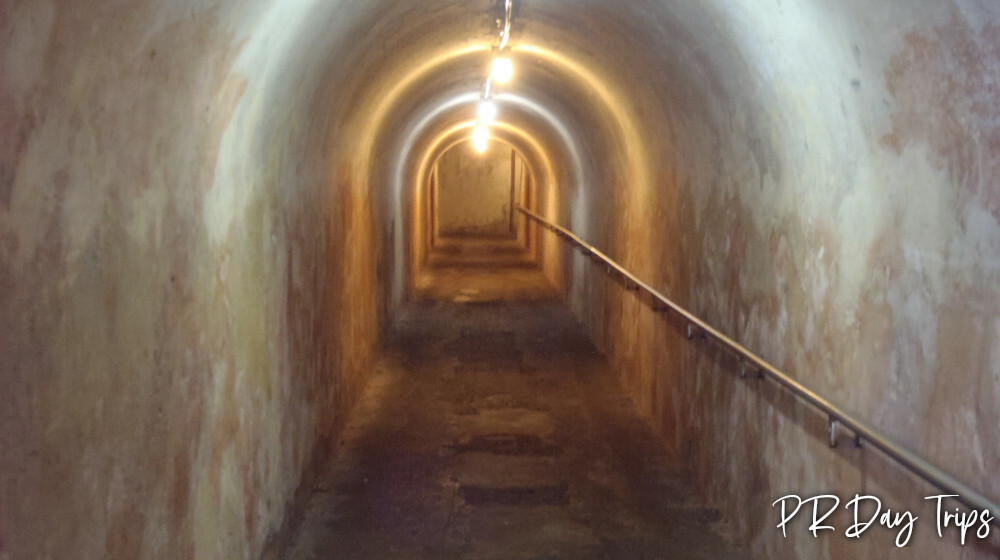
The lower levels and dungeons of El Morro, once used to hold prisoners, are hotspots for chilling reports. Employees and visitors have heard agonized screams echoing from the dark, damp tunnels and cells—cries attributed to tortured or forgotten inmates. Cold spots, faint whispers, and the feeling of being watched are common, even on warm Caribbean days.
Apparitions of prisoners and soldiers have been seen wandering the interior. In one notable investigation, the TV show Ghost Hunters visited the fort's chapel and reportedly captured evidence of paranormal activity on a sunny afternoon. Ghost tour guides frequently share accounts of distressed moans rising from the dungeon levels and soldiers vanishing mid-stride.
The fort's proximity to the historic cemetery and its role in centuries of conflict, imprisonment, and defense are often cited as reasons for the intense activity. Some speculate that the energy of so many lives cut short—by cannon fire, disease, or execution—keeps the dead tethered to the stone.
Visiting El Morro: History by Day, Spirits by Night?
By daylight, El Morro is a vibrant tourist site where you can explore ramparts, cannons, and exhibits while soaking in breathtaking Atlantic views. Kites often fly on the grassy esplanade, and stray cats (a long-standing colony) add a touch of whimsy. But many who linger into evening or join ghost tours of Old San Juan report a shift in atmosphere as shadows lengthen.
If you're brave enough, consider a nighttime ghost walk that includes El Morro—guides share firsthand stories of soldiers disappearing into walls and the White Lady's mournful vigil. Just remember: the fort's thick walls have kept out invaders for centuries... but they may not keep the past at bay.
Whether you believe in ghosts or chalk the experiences up to imagination and the power of suggestion, El Morro remains a place where history feels alive—sometimes uncomfortably so. Next time you're in Old San Juan, walk its corridors with open ears and eyes. You might just catch a glimpse of a white dress on the ramparts or hear a distant "Alerta!" carried on the sea breeze.
Sources:
American Ghost Walks. “The Top Haunted Places & Legends in Puerto Rico.” American Ghost Walks, 18 Nov. 2024, www.americanghostwalks.com/top-haunted-places-and-legends-in-puerto-rico.
“Castillo San Felipe del Morro.” Discover Puerto Rico, www.discoverpuertorico.com/profile/castillo-san-felipe-del-morro/8024. Accessed 24 Apr. 2026.
“El Morro fort in San Juan Has Paranormal Activity.” Facebook, 28 Oct. 2025, www.facebook.com/groups/2230843337163624/posts/4339204082994195/.
Ghost Hunters International. “Soldiers of Misfortune: Puerto Rico.” Season 2, episode 26, Syfy, 16 Feb. 2011.
“Haunted Places in San Juan, Puerto Rico.” TripSavvy, 3 June 2019, www.tripsavvy.com/ghosts-of-san-juan-1622276.
“The Real Haunted Story Of El Morro.” Vocal Media, vocal.media/horror/the-real-haunted-story-of-el-morro.
San Juan National Historic Site. “Park Components - El Morro.” National Park Service, U.S. Department of the Interior, 26 Dec. 2019, www.nps.gov/saju/learn/historyculture/el-morro.htm.
San Juan National Historic Site. “Plan Your Visit.” National Park Service, U.S. Department of the Interior, 26 Jan. 2021, www.nps.gov/saju/planyourvisit/index.htm.
“San Juan’s Picturesque (and Haunted) Forts.” Haunt Jaunts, 2 Mar. 2014, www.hauntjaunts.net/san-juans-picturesque-haunted-forts/.
“10 Most Haunted Places In Puerto Rico.” PuertoRico.com, www.puertorico.com/haunted-places.


Comments
Post a Comment