October 9-Charro Negro
Published by Aaron Perez
Published 10/9/2025
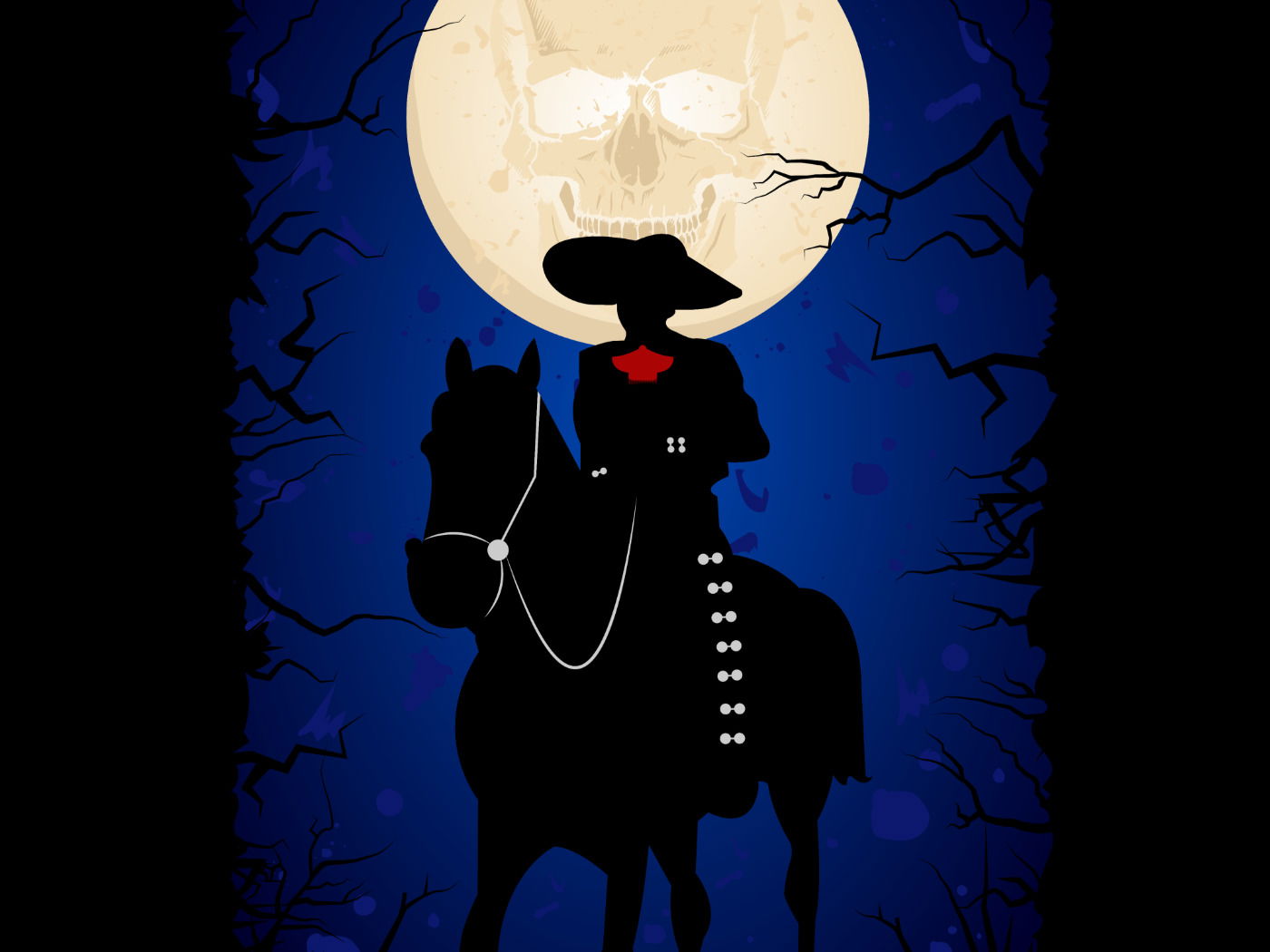
Deep in the heart of Mexican folklore, where shadows dance under the moonlight and the line between the living and the supernatural blurs, resides the haunting legend of the Charro Negro. This mysterious figure, cloaked in darkness and astride a majestic black horse, is one of Mexico’s most enduring and chilling tales. A blend of history, culture, and the supernatural, the Charro Negro is a cautionary tale about greed, temptation, and the consequences of making deals with the unknown. Let’s saddle up and explore the origins, stories, and cultural significance of this enigmatic legend.
The Charro Negro, or "Black Cowboy," is a spectral figure often depicted as a tall, imposing man dressed in the traditional attire of a Mexican charro—a skilled horseman known for elegance and bravado. His outfit is striking: a finely embroidered black suit adorned with silver, a wide-brimmed sombrero, and boots that gleam under the starlight. But what sets him apart is his otherworldly presence. His face is often obscured or skeletal, his eyes glowing with an eerie light, and his horse—sleek, black, and unnaturally swift—seems to gallop straight from the underworld.
In many versions of the tale, the Charro Negro is no mere ghost. He is a manifestation of the devil himself, a trickster who roams rural roads and desolate paths at night, seeking souls to claim. He offers wealth, power, or favors to desperate travelers, but his gifts always come with a steep price—often the soul of the one who accepts his bargain.
The roots of the Charro Negro legend are deeply entwined with Mexico’s colonial past and its cultural melting pot of Indigenous, Spanish, and African influences. The charro tradition itself emerged during the colonial period, as skilled horsemen became symbols of Mexican identity, particularly in rural areas. The Charro Negro likely draws inspiration from these cultural icons, transforming the noble cowboy into a darker, supernatural entity.
Some scholars suggest the legend has pre-Hispanic roots, possibly linked to Indigenous deities or spirits associated with death and the underworld, such as Mictlantecuhtli, the Aztec god of death. The colonial introduction of Catholicism, with its tales of the devil and temptation, likely shaped the Charro Negro into a figure resembling a Faustian dealmaker. African influences, brought by enslaved people during the colonial era, may have added elements of trickster spirits to the mix, creating a uniquely Mexican legend that resonates across generations.
The stories of the Charro Negro vary across regions, but they often follow a similar arc. A weary traveler—often a man down on his luck—encounters the Charro Negro on a lonely road at midnight. The Charro appears charming and generous, offering gold, a fine horse, or even love in exchange for a small favor or a promise. Those who accept his offer soon find themselves ensnared in a trap, as the Charro returns to claim what is owed—usually their soul.
In one popular version, a poor farmer meets the Charro Negro and is offered a sack of gold coins to solve his financial woes. In return, the Charro asks for a simple token: the farmer’s loyalty. Blinded by greed, the farmer agrees, only to find that the coins turn to ash by morning, and the Charro returns each night, drawing closer until the farmer’s soul is dragged to the underworld.
In another tale, a young man seeking to win the heart of a woman accepts the Charro’s help. The Charro provides a magical charm, but the price is the man’s life force. As the young man’s love flourishes, his health fades, and he realizes too late that he has been marked by the Charro Negro.
The Charro Negro is more than a spooky tale told around campfires; it’s a reflection of Mexican values, fears, and history. At its core, the legend serves as a warning against greed, recklessness, and the allure of easy solutions. The Charro’s offers of wealth or power mirror the temptations that can lead people astray, reinforcing the importance of integrity and caution.
The figure also embodies the tension between tradition and the unknown. The charro is a symbol of Mexican pride and skill, yet the Charro Negro twists this image into something sinister, perhaps reflecting anxieties about losing cultural identity or succumbing to external influences during colonial times.
In rural communities, the Charro Negro is a reminder of the dangers lurking in the night, encouraging people to stay safe and avoid wandering alone. The legend also underscores the power of storytelling in Mexican culture, where oral traditions keep history and morality alive.
The legend of the Charro Negro continues to captivate modern audiences, appearing in literature, film, and art. In 2018, the animated film La Leyenda del Charro Negro brought the character to life for younger audiences as part of the popular Las Leyendas series, blending humor and adventure with the spooky tale. The Charro has also inspired songs, novels, and even urban legends, with some claiming to have seen him on moonlit roads in states like Puebla, Tlaxcala, or Hidalgo.
In a broader sense, the Charro Negro resonates in a world where temptation—whether in the form of wealth, power, or instant gratification—remains a universal theme. His story reminds us that shortcuts often lead to perilous destinations.
The Charro Negro is more than a ghostly cowboy; he’s a cultural icon, a warning, and a testament to Mexico’s rich storytelling tradition. Whether you see him as the devil, a vengeful spirit, or a metaphor for human weakness, his legend endures, galloping through the collective imagination of Mexico. So, the next time you find yourself on a lonely road at night, listen closely for the sound of hooves. If a dashing figure in black offers you a deal that seems too good to be true, you might just want to keep walking—lest you become the next chapter in the tale of the Charro Negro.
Sources:
"Classic Mexican Horror Stories: El Charro Negro." Artes Muertos, artesmuertos.com/blogs/scary-stories/classic-mexican-horror-stories-el-charro-negro. Accessed 9 Oct. 2025.
Hernandez, Bardo. "El Charro Negro." Vocal Media, vocal.media/horror/el-charro-negro. Accessed 9 Oct. 2025.
"México Tales and Legends: The Charro Negro." The Yucatan Times, 12 Aug. 2023, theyucatantimes.com/2023/08/mexico-tales-and-legends-the-charro-negro/. Accessed 9 Oct. 2025.
Sanchez, Alejandro. "The Spirit of Legends: El Charro Negro and Agave Heritage." LinkedIn, www.linkedin.com/pulse/spirit-legends-el-charro-negro-agave-heritage-alejandro-s%25C3%25A1nchez-eplfc. Accessed 9 Oct. 2025


Comments
Post a Comment